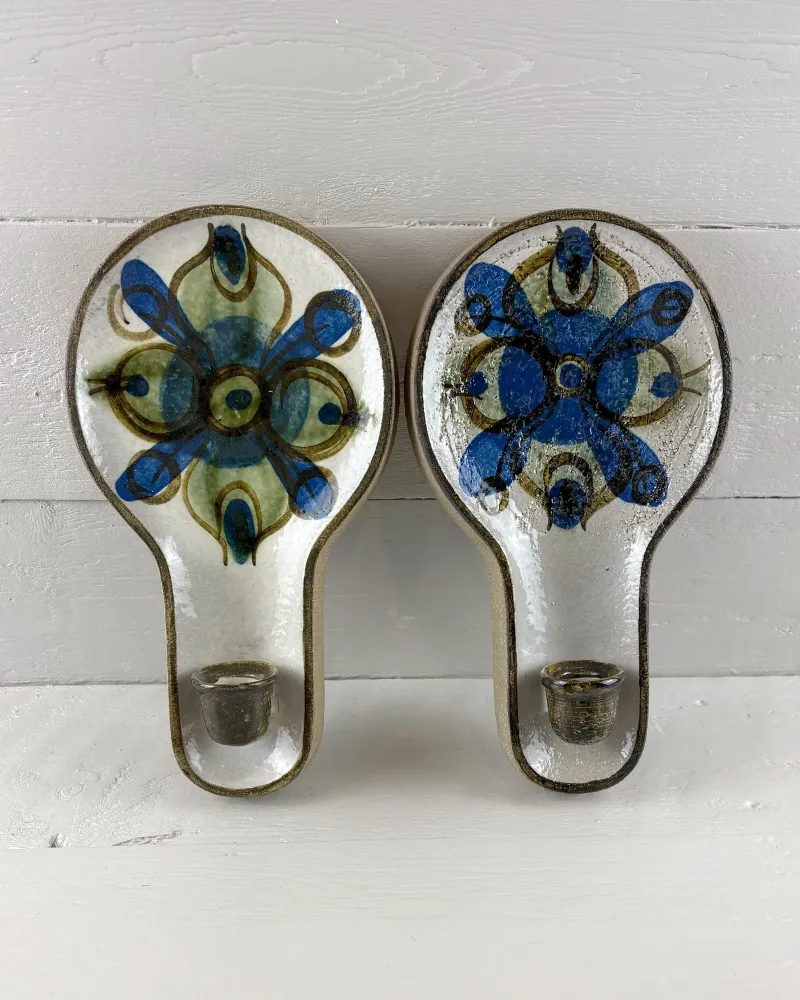
Hand-painted motifs, rich glazes and stylised plants and birds are what most collectors recognise in the work of Noomi Backhausen, the Danish ceramic artist who spent nearly a quarter of a century at Søholm Stentøj in Rønne on Bornholm. Joining the pottery in 1966 and staying until 1990, she became one of the designers most closely associated with its modern stoneware, from table lamps and wall lights to vases, bowls and wall reliefs.
Much of her best-known output came from a partnership with the form designer Poul Brandborg. He developed the shapes, and she gave them their surface: the painted patterns, the choice and layering of glazes, and in some pieces raised or incised relief. The Cactus and Erika series, both produced in the 1960s and 1970s, are the clearest result of that collaboration and run across lamp bases, vases, candle holders and other household pieces.
Under her own name she also designed decorative wall plaques and reliefs, many of them showing birds, branches or abstract plant forms in warm, earthy glazes. These were issued under Søholm shape numbers in the 3500 range, among them 3556, 3557 and 3563, and some larger relief panels date from the late 1970s. Alongside them came plates, bowls and centrepieces with painted decoration.
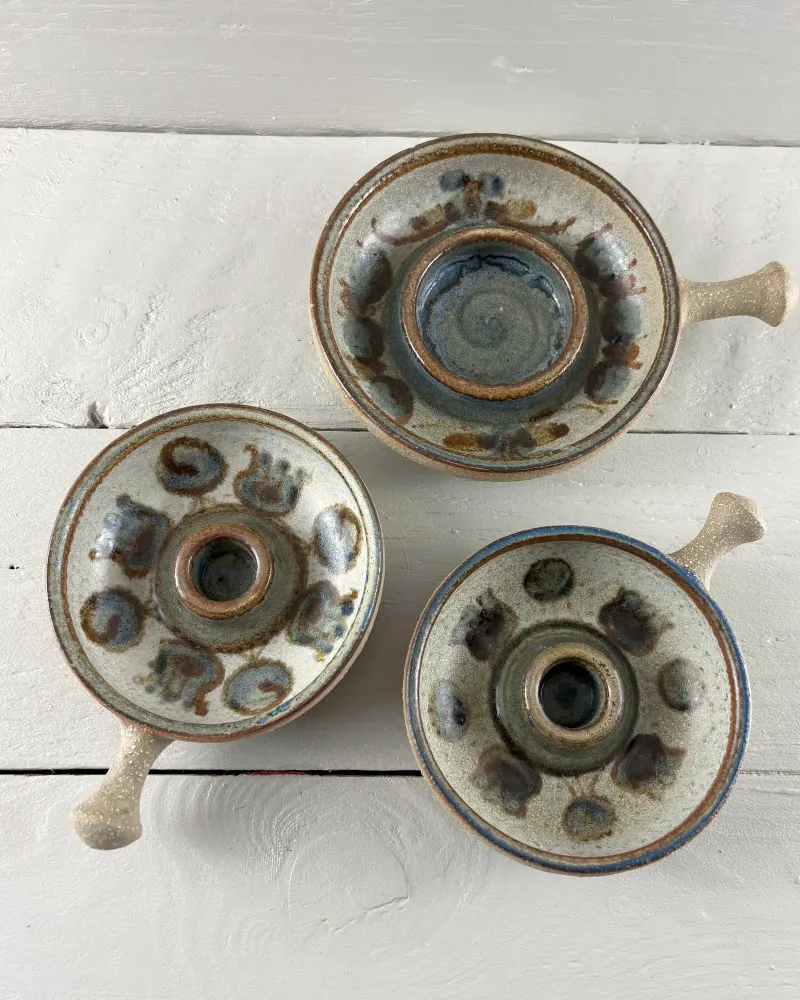
Her decoration is direct and confident rather than delicate. Motifs are drawn with a loaded brush and often outlined in a darker colour, and the glazes range from earth browns and moss greens to cobalt blue on a white ground. Because each piece was painted by hand, two items of the same model rarely match exactly, and the coarse, sandy Bornholm clay is left visible on unglazed edges and backs.
Backhausen was born in 1938 and died in 2011. Her pieces from the Søholm years usually carry the factory's stamp on the reverse together with a four-digit shape number, sometimes followed by a further digit that marks a colour or decoration variant. As with other Søholm designers, her name is not part of the mark, so attribution relies on the shape number and on the documented series. Her lamps and reliefs are widely collected today, largely for the colour and sense of play they bring to Danish mid-century stoneware.
 01