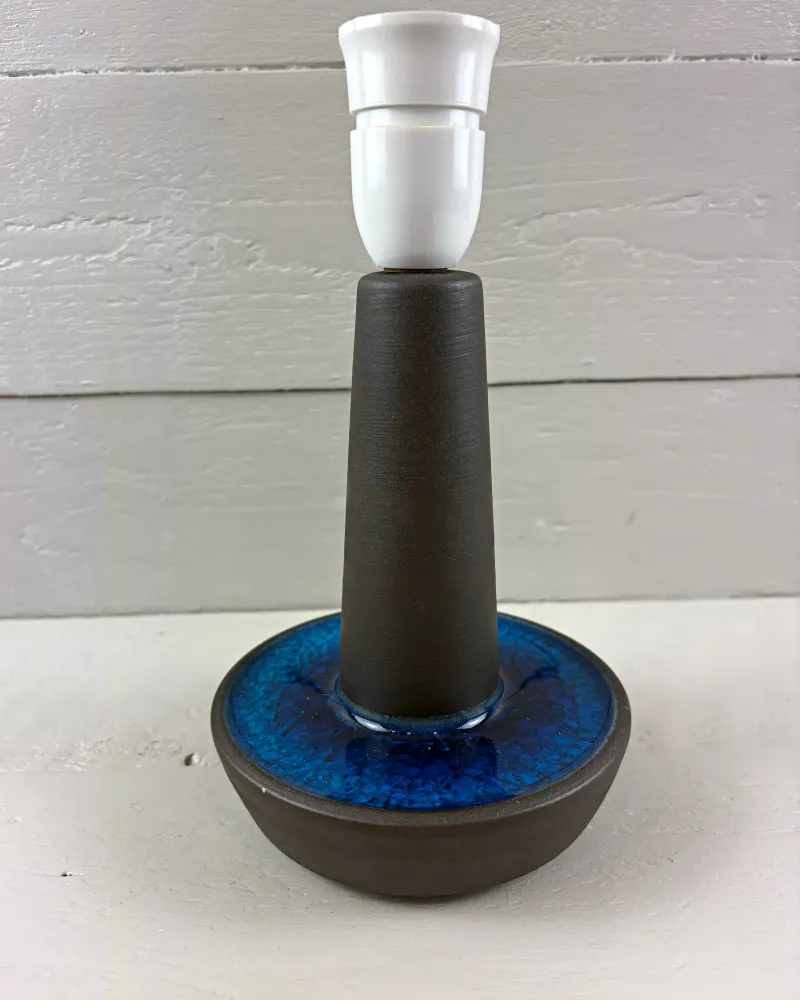
Heavy stoneware table lamps, faceted vases and low relief-patterned bowls in deep blue, ash grey and brown make up most of what collectors know of Einar Johansen, the Danish ceramicist behind some of the strongest designs to come out of Søholm on Bornholm. His work for the Rønne factory dates from the late 1950s through the 1960s, the period when Søholm was building up its stoneware range.
Little is recorded about Johansen's life outside the factory, and reliable dates for his birth and training are hard to find. What survives is the work itself: a large and consistent body of stoneware produced in series, marked with the Søholm stamp and a model number, which makes his pieces easier to trace than many of the anonymous wares of the time.
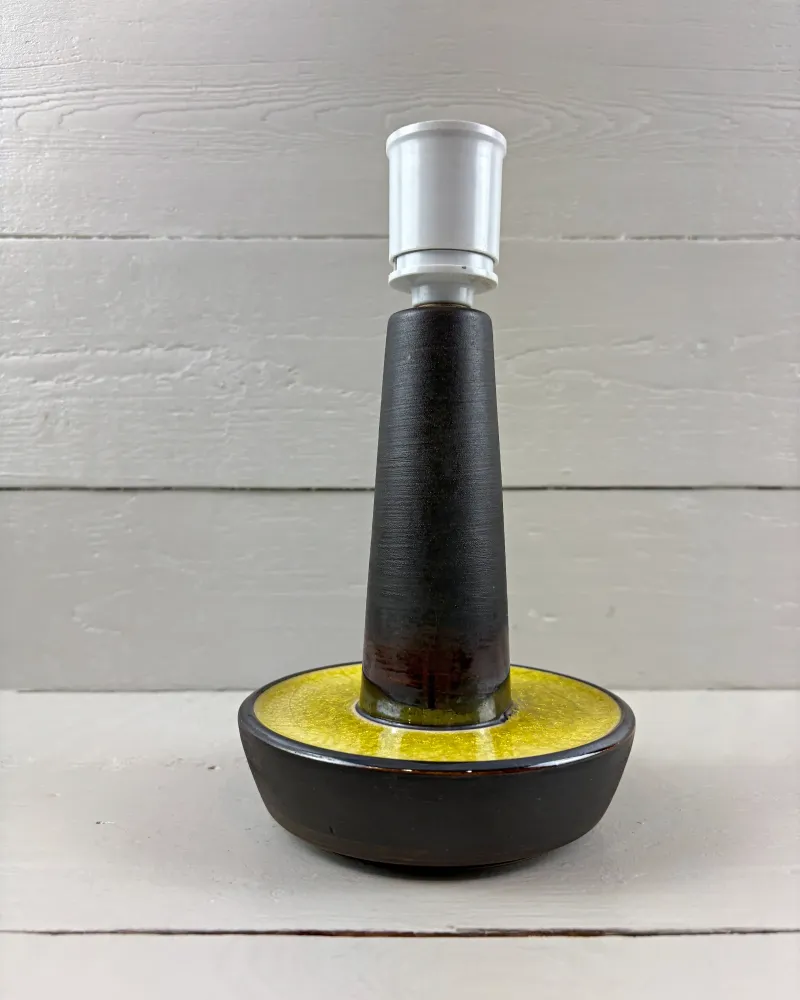
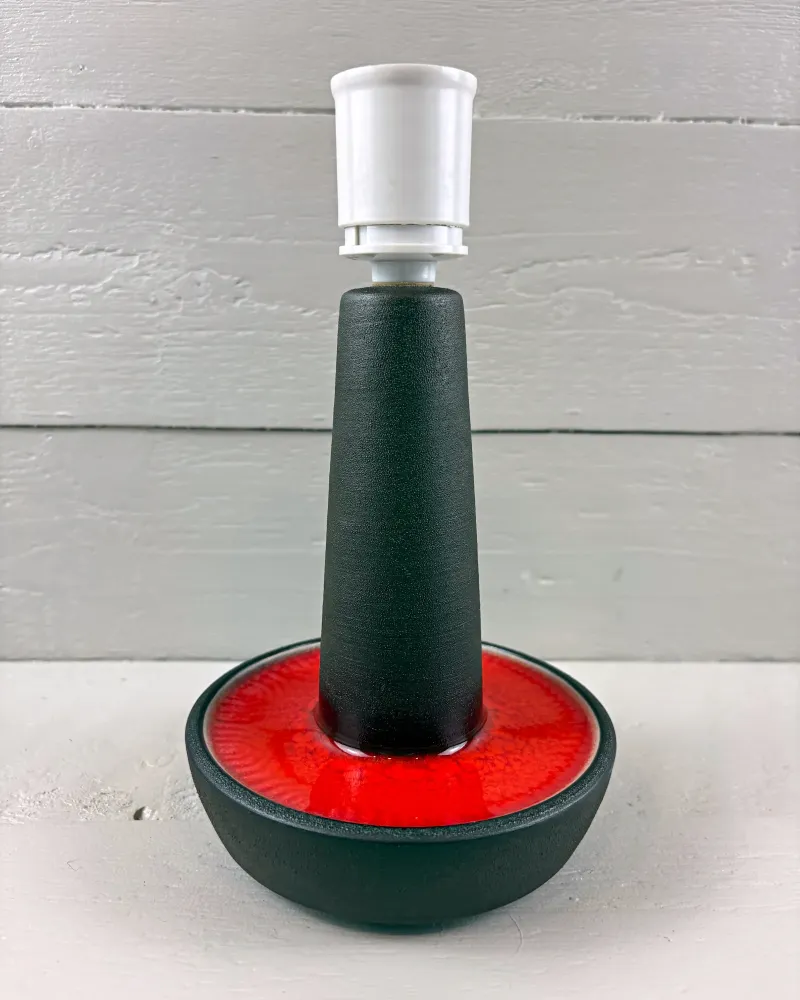
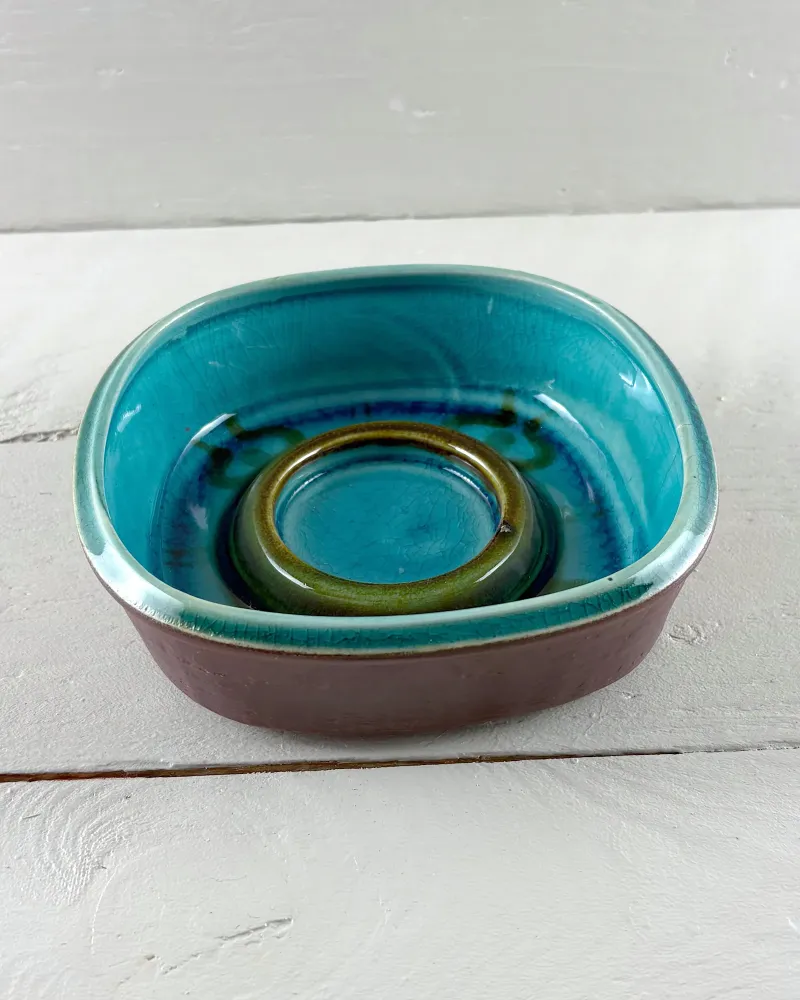
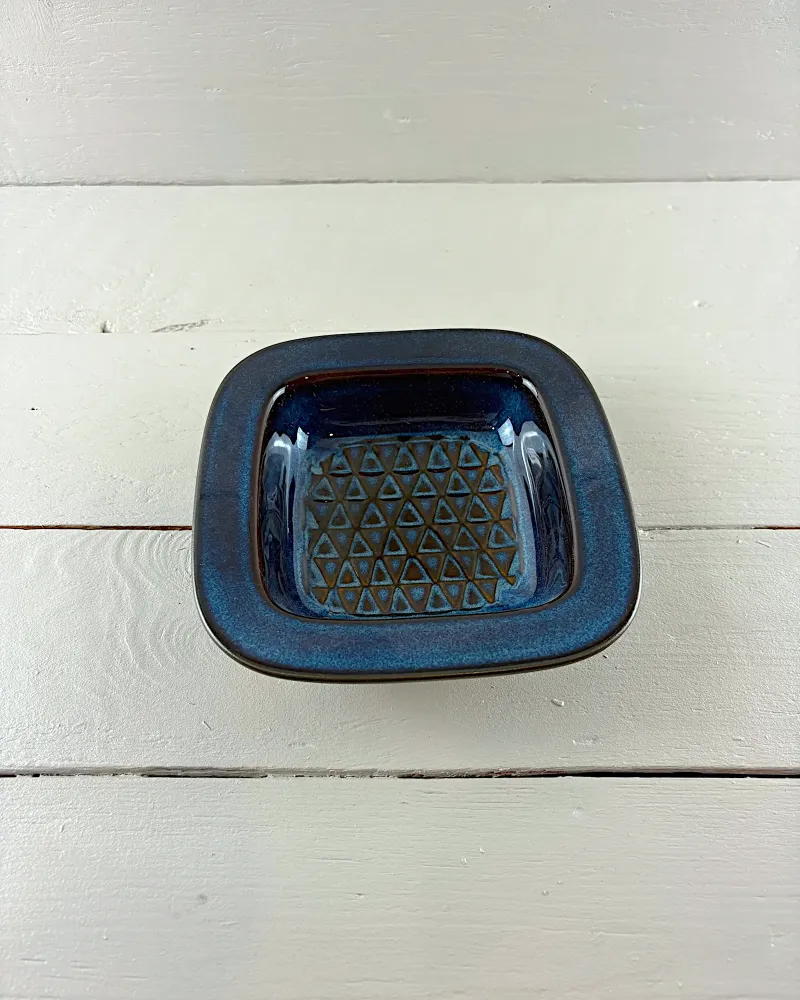
Johansen's forms are compact and architectural rather than soft. Lamp bases are solid and sculptural; bowls and dishes tend towards the square, with rounded corners and broad rims; many surfaces carry a pressed or carved geometric relief, such as rows of small triangles. The glazes are what give these shapes their character. Dark cobalt and midnight blues settle into the recesses of the relief and break lighter over the edges, while volcanic greys, rust tones and matt browns are often combined on a single piece, so that the pattern appears or recedes depending on the light.
Around 1964 he developed the group that dealers and collectors now call the EJ64 series, a set of vases, lamps, bowls and dishes sharing these deep glazes and angular profiles. Pieces from this period, and his large table lamps in particular, have become some of the most sought-after Søholm designs on the vintage market, valued for pairing a clear, modernist structure with the depth and variation of the glaze.
For identification, look for the Søholm factory mark on the base together with a model number; the glaze and relief pattern usually confirm the attribution. Glazes of this kind vary from firing to firing, so the balance of blue and brown can differ noticeably between two examples of the same model.
 01
 02
 03
 04
 05