Paul Kedelv is remembered as the Swedish glass designer behind the shell-like Coquille range for Flygsfors, and as the man who went on to spend more than two decades designing for the Reijmyre glassworks. Born in 1917, he worked through the middle of the twentieth century, when Swedish glass was moving away from engraved, classical decoration towards heavier, more sculptural forms.
His training began early. In 1931 he joined the drawing studio at Orrefors as a student, working under Simon Gate and Edward Hald, two central figures of Swedish glass design at the time. From 1949 to 1956 he was employed at Flygsfors, and in 1956 he moved to Reijmyre, where he remained until 1977. He is also recorded as having designed for Nybrofabriken in Fröseke and for the Fåglavik glassworks.
Flygsfors is where Kedelv made his name. The Coquille range, sometimes described as shell glass, is built from layers of coloured and clear glass, with white, pink and green double-layer pieces among the best known. Vases, bowls and large centrepieces from the series have a weight and a soft, curving outline that set them apart from the lighter tableware of the period. Kedelv also drew a tall floor vase for the H55 exhibition in Helsingborg in 1955, the large Swedish showcase of architecture, housing and design organised by the Swedish Craft Association.
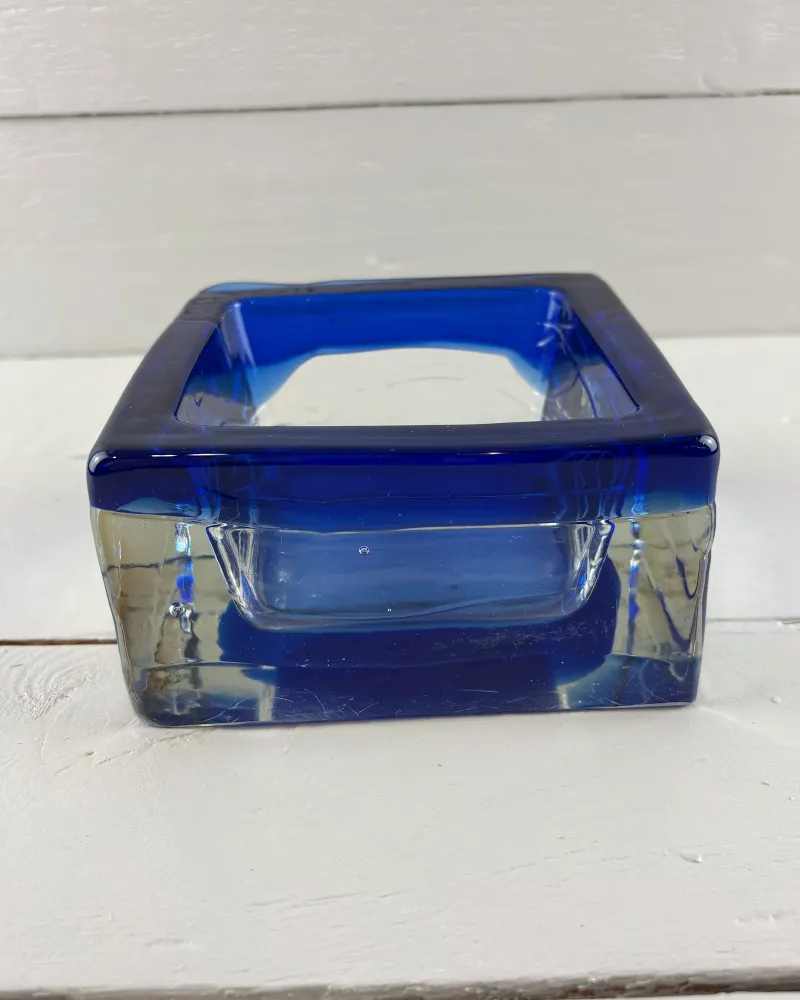
At Reijmyre his work kept the same interest in layered colour but moved towards thicker, more sculptural glass. The Harlequin range, which auction houses compare to Coquille, combines black, green and clear cased glass in bowls and sculptural objects. Sargasso, dated to the 1960s, is made up of heavy pieces in clear glass combined with blue or green, with fine threads trapped in the walls; it includes vases and lamp bases with brass mounts, and its name recalls the drifting seaweed of the Sargasso Sea.
Across both factories the logic is similar. Colour is built up inside the glass instead of being applied to the surface, edges are rounded or slightly irregular, and the shapes lean towards sculpture rather than strict tableware. That consistency is why Flygsfors and Reijmyre pieces by Kedelv share a recognisable depth and heft even when their forms and palettes differ.
For collectors, marks help but are not always present. Flygsfors pieces are often engraved on the base with the factory name, a two-digit year and a model name, and some Reijmyre pieces carry a signature and a date. Because not every piece is signed, the weight, the layering of the colour and the finish of the edges remain important clues when attributing a piece. Kedelv's glass is offered regularly by Swedish auction houses and international dealers, which keeps his name familiar to collectors of mid-century Scandinavian art glass.
 01