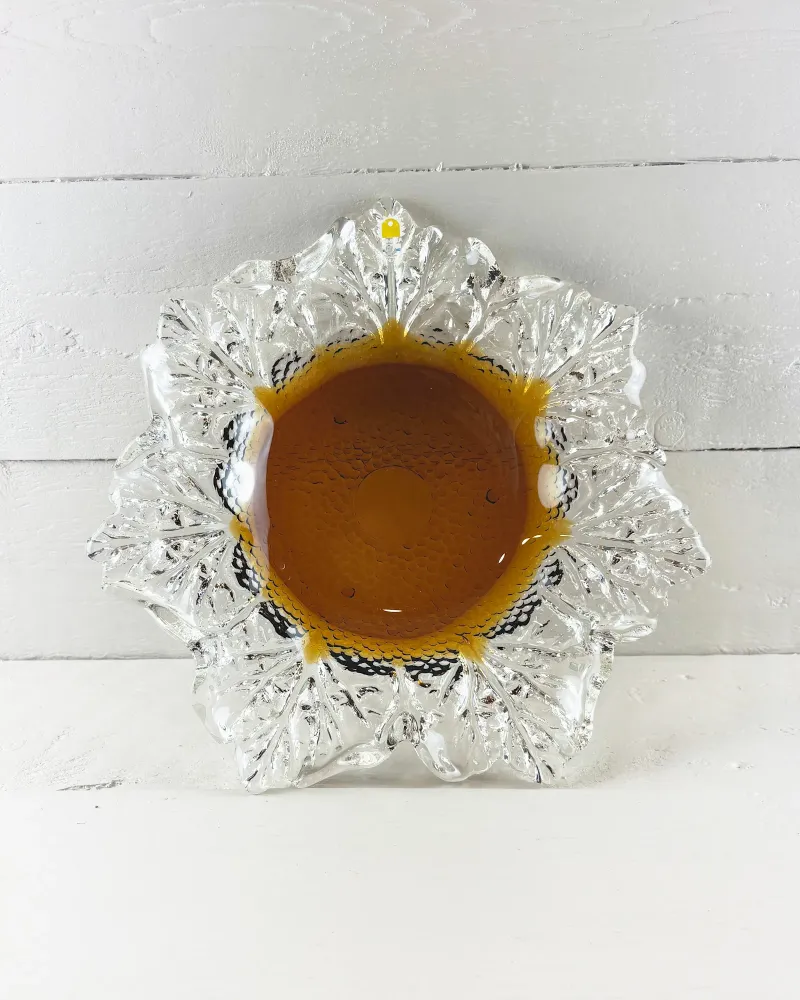
Heavy, thick-walled glass with a surface that looks weathered rather than polished is the signature of Pertti Santalahti, the Finnish glass designer behind much of the art glass produced at the Humppila glassworks in the 1970s. Bowls, vases, dishes and candle holders from his Humppila years remain some of the most recognisable pieces of Finnish studio-style glass from that decade.
Santalahti was born in Helsinki in 1941 and trained in sculpture at the Institute of Industrial Arts in Helsinki, completing his studies as a designer in 1962. That sculptural background shows in his later glass, which is built around mass and texture more than thin, blown elegance. In the early years of his career he moved between several manufacturers: the ceramics firm Kupittaan Savi, the Nuutajärvi glassworks, and Alsterfors in Sweden, where he worked during the mid-1960s. He also designed on a freelance basis for Arabia and Iittala.
His long association with Humppila began in 1971, when he joined the glassworks in southern Finland to develop new products. By 1974 he had become its artistic director, a post he held until 1981. Humppila, founded in 1952, made both everyday tableware and decorative glass, and under Santalahti its art glass took on a distinctly rugged character. After 1981 he continued to work for the company as a freelance designer.
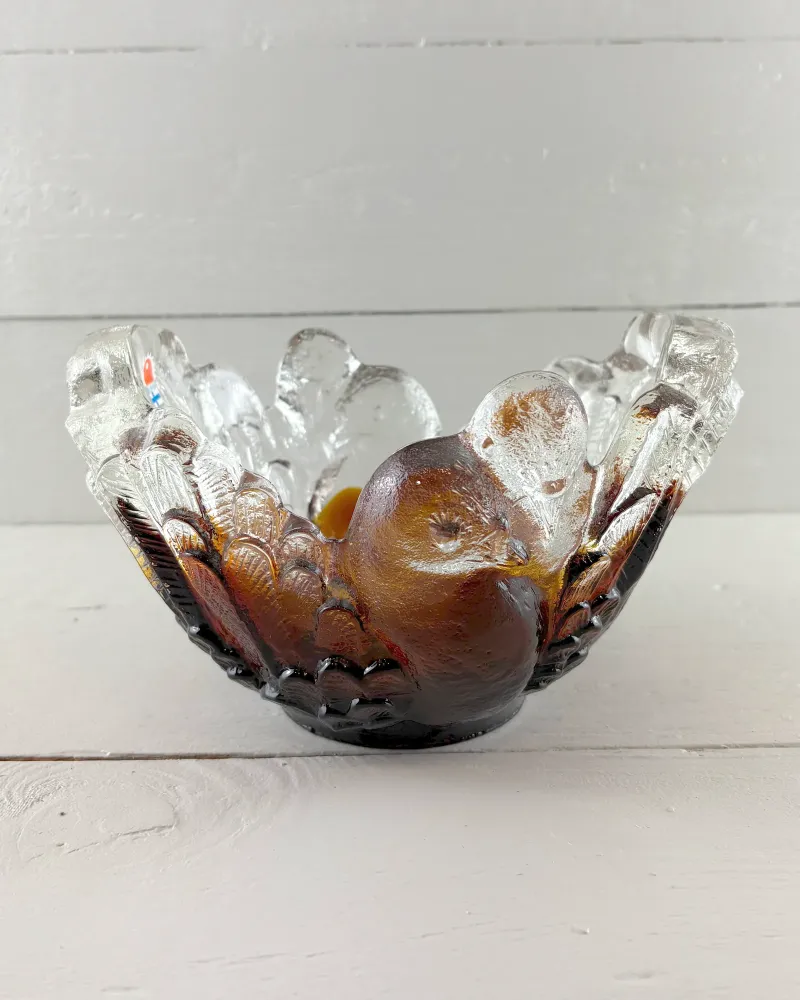
The series most closely linked to his name are Kivi-Set (stone set) and Kasvimaalla (in the vegetable garden), together with Taottu and the Talonpoika series, created with Vesa Antikainen. Their forms take their cues from Finnish nature, especially stone, ice and plant life. Surfaces are often rough or crackled, so that clear or amber glass catches the light much like a frozen lake or a split rock. The result is glass meant to be handled and used, not only displayed, which suits the robust bowls, trays and candle holders that make up much of his output.
Santalahti's Humppila pieces are frequently signed on the base, typically with his name together with the factory name, and some still carry the original Humppila paper label. These marks make his work comparatively easy to identify. He died in Humppila in 2015. Today his heavy, textured glass is collected as a characteristic expression of 1970s Finnish design, sitting between postwar modernism and the bolder, more tactile taste of that decade.
 01