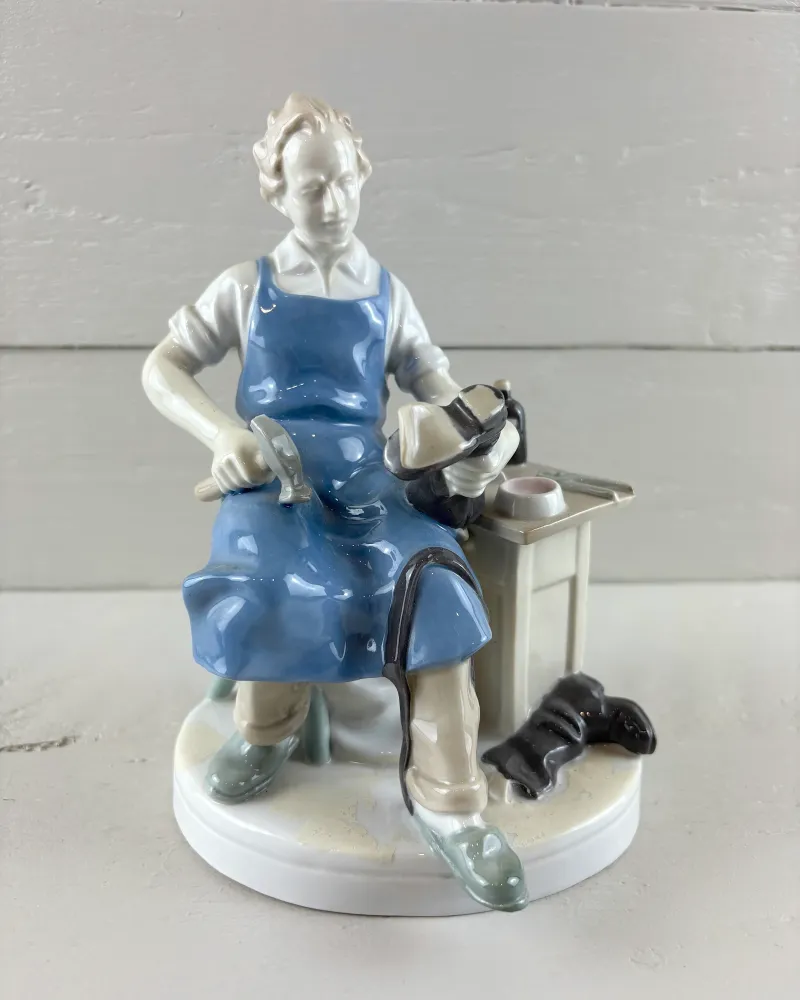
Gräfenthal porcelain is the name collectors most often attach to the figurines made in the small Thuringian town of Gräfenthal, in central Germany, by the factory Carl Scheidig founded in 1906. Couples in historical dress, children, animals and genre scenes left its kilns for most of the 20th century, and pieces from the interwar decades and the East German period are the ones that turn up most often on the vintage market today.
Scheidig opened his works at a time when Thuringia was already one of Europe's densest porcelain regions, with raw materials, skilled modellers and painters close at hand. From the start the factory concentrated on decorative figures rather than tableware. Its catalogue kept growing over the decades until it ran to more than ten thousand models, which helps explain why so many different Gräfenthal subjects circulate among collectors.
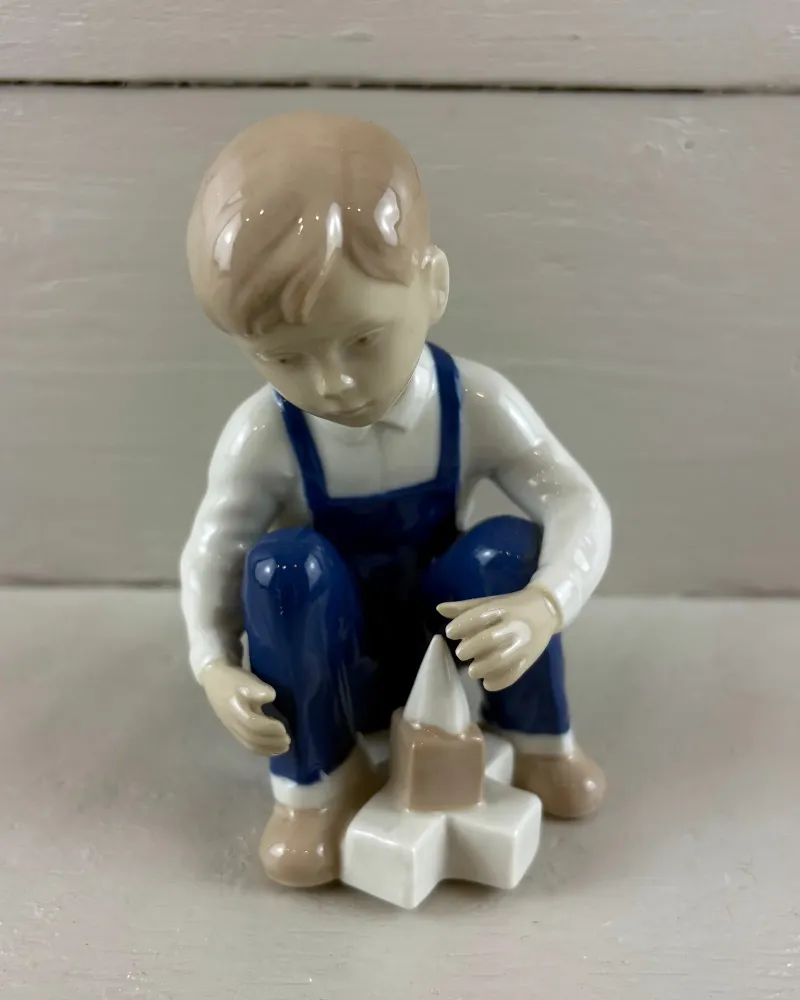
The figures follow a recognisably Thuringian tradition: finely modelled figures with hand-painted decoration in soft colours. Many groups revive the romantic and rococo taste of the 18th century, with courting couples, musicians and shepherdesses, while others are more everyday, such as girls with ducklings, nurses at work or hunting dogs. Quality depends on the period and the painter, so the sharpness of the modelling and the care in the decoration are worth checking closely on any individual piece.
After the Second World War Gräfenthal found itself in the German Democratic Republic. The privately run firm kept its founder's name until 1972, when it was nationalised and continued as VEB Porzellanfiguren Gräfenthal, still focused on figurines. After reunification the business carried on for a time under the name Porzellanfiguren Gräfenthal GmbH, which referred back to Scheidig in its full company name, before production under the Gräfenthal name came to an end.
For dating, the marks on the base are the most useful guide. The earliest pieces carry an eagle with the initials CS. From the mid-1930s a crowned eagle and a crowned S were used, sometimes with words such as Kunstporzellan or Germany, and in the East German years the crowned S appears above GDR or above the town name. Collectors should also know that Gräfenthal was home to other porcelain makers, including Weiß, Kühnert & Co., known for small figures and doll heads, and the Schneider family factory, which made tableware, so the mark rather than the place name alone identifies the maker.
 01